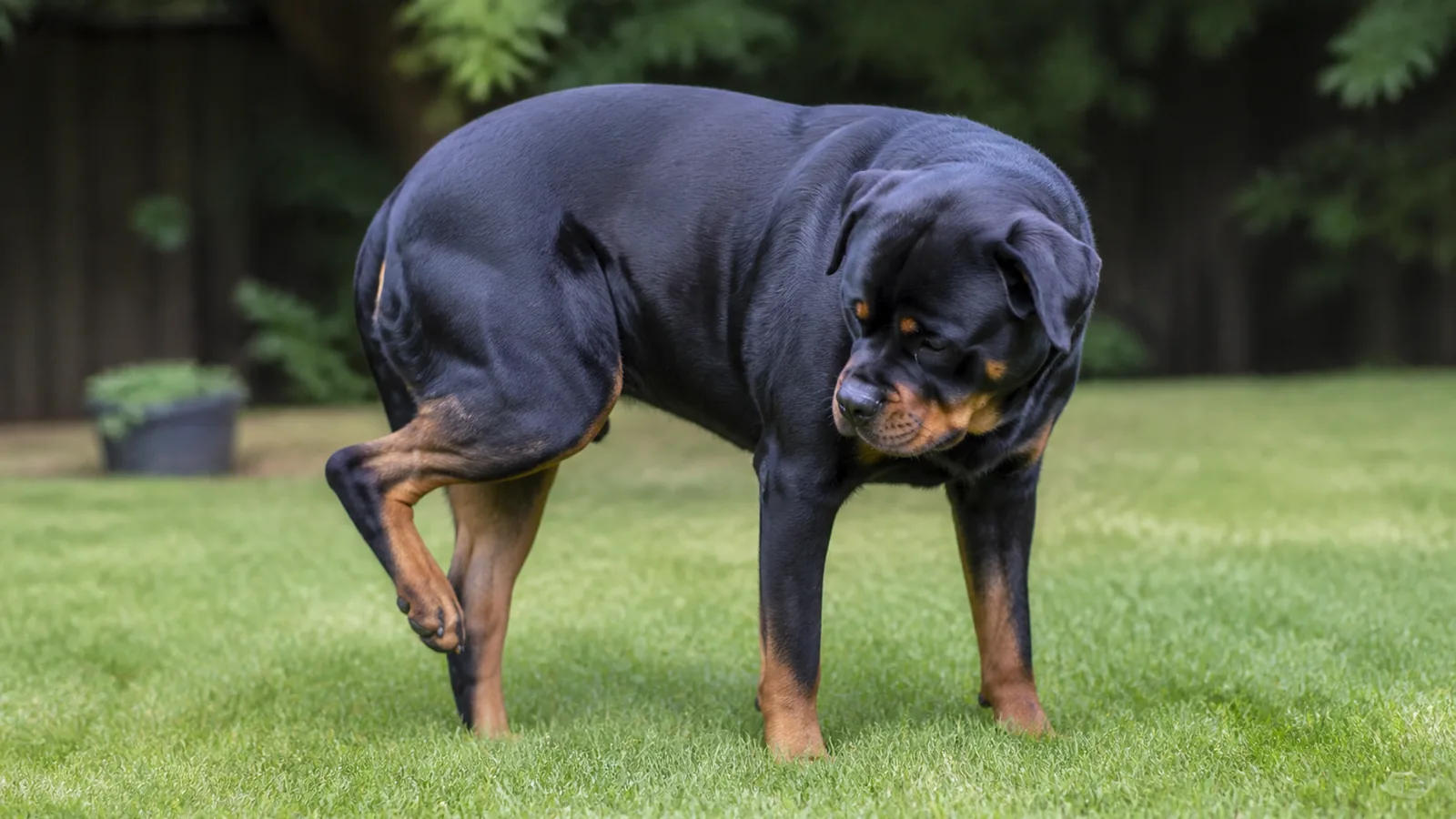
The signs of a cruciate ligament injury vary widely: an on-and-off mild limp, sitting with a leg kicked out, a little stiffness when getting up, or a full three-legged limp where they won't use their hurt leg at all. The cranial cruciate ligament, or CCL, stabilizes the knee by stopping the shin bone from slipping forward under load, and in dogs it usually fails slowly rather than all at once. Fibers fray over months while your dog still runs and plays, and then an ordinary jump off the couch finishes what was already mostly torn. That is why the limp looks sudden when the damage was not, and why the other knee deserves watching: dogs who tear one cruciate often injure the second within a year or two. A torn ligament does not heal on its own, and the right treatment depends on your dog's size and activity level, so an early exam is what protects the joint.
Lewiston Veterinary Clinic treats cruciate injuries in working dogs and family pets across the valley, starting with a hands-on knee exam and digital X-rays that show the condition of the joint and rule out other reasons for a limp. Our orthopedic surgery includes lateral suture repair for a torn CCL, which suits many smaller and less active dogs. Larger and athletic dogs are often better served by a TPLO, a procedure that changes how the knee carries weight rather than bracing it from the outside, and we will say so and help you arrange it when that is the right approach. If your dog is favoring or holding up a back leg, call us so we can look at that knee before the joint takes on more wear.
Torn Cruciates in Plain English
- A torn cruciate rarely comes from one bad step, and the limp you noticed is usually the last frayed fibers giving way after months of quiet wear.
- Rest can quiet the limp for a while, but it doesn't stabilize the knee, and the joint keeps grinding itself down in the meantime.
- Size, build, and activity level decide which repair fits: a smaller, calmer dog may do beautifully with a lateral suture, while a big athletic dog usually needs a TPLO.
- Most of the outcome is won at home, in eight to twelve weeks of controlled rest and a slow, planned return to normal life.
Why Do Dogs Tear This Ligament Without a Single Bad Injury?
Cruciate ligament injury in dogs usually builds over months of quiet degeneration rather than arriving with one bad landing, and once that band of tissue frays, the tibia starts sliding forward under the femur with every step.
A dog's knee isn't built like yours. The top of the shin bone tilts on a slope, so every push off the ground tries to shove it forward while the cruciate absorbs the shear. Steeper slope, harder job. Some dogs are simply born with knees that ask more of that ligament than it can deliver over a lifetime.
Anatomy is only part of it. Weight, breed, and lifestyle stack on top:
| Risk factor | Why it matters |
| Breed and build | Labs, Rottweilers, Newfoundlands, and Staffordshire Terriers tear cruciates far more often than average. |
| Steep tibial plateau angle | A sharper slope at the top of the shin puts more shear through the ligament with every stride. |
| Extra body weight | More load per step, thousands of steps a day, on tissue that's already fraying. |
| Weekend-athlete patterns | Quiet all week, then flat-out sprinting on Saturday, loads a deconditioned knee at full speed. |
| A tear on the other side | The same build and the same load are still there, so the second knee is at real risk within a year or two. |
Weight and exercise discussions are a part of every wellness care visit, especially with the big, active dogs we see around Lewiston. Taking a few pounds off a stocky Lab is one of the few levers that changes the odds for both knees at once.
What Does a Torn Cruciate Look Like at Home?
The giveaway is a back-leg limp that answers to rest and then comes back. A partial tear often shows up as limping that eases after a few quiet days and returns as soon as your dog resumes normal activity. A complete tear is more obvious, and the foot may never touch the ground at all.
Between those two extremes, the clues are subtle:
- The sit test: the sore leg slides out to the side instead of tucking underneath.
- Morning stiffness: the worst few steps come right after a nap, then loosen up.
- A thickened knee: run both hands over both stifles and the injured one often feels fuller on the inside.
- Toe-touching: the paw rests on the floor for balance while the leg carries almost nothing.
- A shrinking thigh: over a few weeks, the muscle on the sore side gets visibly smaller.
- Doing less: slower on the stairs, skipping the hop into the truck, no longer beating you to the door.
Watch those changes across days rather than waiting for a three-legged limp to make the decision for you. One thing to skip while you wait: the medicine cabinet. Never give ibuprofen, naproxen, aspirin, or acetaminophen to a dog, because human anti-inflammatories cause stomach ulcers and kidney damage and complicate the safe prescriptions we'd otherwise start. A dog who won't bear weight on a back leg should be seen promptly, and our team handles urgent care during our open hours. After we've closed, small animal calls route to an evening on-call rotation, so there’s always someone available to talk to.
How Do We Confirm It's the Cruciate and Not Something Else?
Confirming a tear takes hands-on orthopedic testing plus pictures of the joint. X-ray imaging doesn't capture the torn ligament itself, but it does show the joint swelling, bone spurs, and early arthritis that tell us how long the knee has been unstable.
Here's how the workup usually goes:
- Watching the walk: gait first, at a walk and a trot, before anyone touches anything.
- Cranial drawer and tibial compression: two hands-on tests that check whether the shin slides forward abnormally. A tense dog can brace hard enough to hide it, so sedation sometimes gives the honest answer.
- Radiographs of both knees: we take films of both stifles, and check for other reasons for the limp: hip dysplasia, luxating patellas, low back pain, and in older large-breed dogs, bone tumors that can all masquerade as a cruciate injury.
When the exam findings are murkier than usual, MRI adds the soft tissue detail radiographs can't, including a clearer look at the meniscus. Most knees never need it. For the ones that do, we refer to a specialty center and set up the appointment for you.
What Happens If We Just Wait and See?
A torn cruciate doesn't knit itself back together, and the joint never regains its own stability. Every step taken on an unstable knee wears away cartilage that does not grow back, which is why arthritis settles in faster and deeper in dogs whose tears go untreated.
Three other things happen quietly in the meantime. The joint capsule thickens with scar tissue, which stiffens the knee and limits how far it will bend. The meniscus, a cushion of cartilage that now gets pinched by the shifting bones, can tear on its own, and pet families often describe a sudden setback with an audible click. And the thigh muscle melts away from disuse, so a dog who has surgery six months late starts rehab in a deeper hole than one who has it early.
None of that means you have to decide today. It does mean waiting costs something, so book an evaluation while all of the options are still on the table.
Can We Treat This Without Surgery?
Conservative management means strict confinement, prescription anti-inflammatories, weight control, and guided physical therapy instead of an operation. It's a fair option for a narrow group: small dogs under roughly 30 pounds with a partial tear and a calm daily routine, where enough scar tissue forms around the joint to keep them comfortable.
Be honest with yourself about what it asks. Two to three months of leash-only bathroom trips, with no couch, no stairs, and no chasing the cat, is often stricter than post-surgical care, and it has to hold the whole time. For most medium, large, and giant breeds, and for any dog whose job or joy involves running, surgery gives better long-term function and slows arthritis more effectively than rest does.
Some dogs can't have anesthesia safely, and that's a real conversation too. When that's the case, we build the strongest non-surgical plan we can with pain medication, weight targets, and a home exercise routine, and therapeutic laser can add comfort for an inflamed joint. If you're weighing the two paths, reach out and we'll talk it through with your dog's size, age, and health in front of us.
TPLO or a Lateral Suture: Which Repair Fits Your Dog?
The right procedure comes down to your dog's size, age, and activity level, together with the slope at the top of their shin bone. Both surgeries aim at the same result: a knee that stays stable through a full stride, arthritis that creeps in slowly instead of quickly, and a dog who's comfortable on all four feet again.
| Approach | Suits | What it does | Recovery |
| Lateral suture (extracapsular) | Smaller, calmer, or older dogs | A strong suture placed outside the joint stands in for the torn ligament while scar tissue matures | Usually 8 to 12 weeks of controlled activity |
| TPLO | Medium, large, giant, and athletic dogs | The top of the tibia is cut and rotated to level the slope, so stability no longer depends on the ligament | Usually 8 to 12 weeks, with X-rays to confirm bone healing |
| Conservative care | Small dogs, partial tears, dogs who can't have anesthesia | Rest, medication, weight control, and physical therapy | Slower and less predictable |
What Each Surgery Does Inside the Knee
TPLO surgery changes the angle at the top of the tibia so the knee stays stable without relying on the torn ligament at all, which is why it holds up so well for medium, large, and highly active dogs. A lateral suture works from the outside instead, anchoring a strong loop of material across the joint to stop the forward slide while the body lays down its own supportive scar. In a 22-pound terrier, that outside brace holds up beautifully. In an 70-pound Cattle Dog working the herd, the forces are simply bigger than the suture was designed for.
We perform lateral suture repairs here, with surgical repair and anesthetic monitoring planned around each dog's age and health, and pain control that starts before the first incision. A TPLO is a different job with different equipment, so we refer those to a board-certified surgeon, coordinate the appointment, and handle the rechecks and recovery plan once your dog is home. Most dogs go home within a day of either procedure, walking gingerly on the leg.
What Rehab Looks Like After the Repair
Structured rehabilitation is what turns a good surgery into a good outcome, rebuilding the thigh muscle that wasted away before the repair and restoring the range of motion the joint gave up while it hurt. Skipping it is the most common reason a technically perfect repair underperforms.
The staging is straightforward. The first two weeks protect the incision: cold packs, gentle bending and straightening of the joint by hand, and leash trips outside for bathroom breaks only. Weeks three through six add short, flat, boring leash walks that grow by a few minutes at a time. After that come gentle hills, wide figure eights, and slow sit-to-stand repetitions that ask the sore leg to carry its share again. Every dog moves at a different pace, and our veterinarians adjust the timeline at each recheck rather than following a calendar.
What Does Recovery Look Like at Home?
Plan on roughly eight to twelve weeks of confinement, leash-only potty trips, and a hard no on jumping, stairs, and wrestling with the other dog, followed by a deliberate rebuild of ordinary activity that takes weeks longer than you'd expect.
Making Crate Rest Work for Both of You
Eight weeks of crate rest is often harder on the family than the surgery was on the dog, and it goes better with the crate parked where the family spends its evenings and a daily rotation of puzzle feeders, scent games, and short training sessions your dog can do lying down.
A predictable rhythm helps enormously: meals, enrichment, potty trip, nap, repeat. Traction matters too, since one skidding scramble across the kitchen floor can undo weeks of healing. Runners between the crate and the door, a towel sling under the belly for the first few days, and a slip lead on every single trip outside will cover most of the risk. If your dog is chewing at the incision, refusing to settle, or the leg looks worse instead of better, give us a call instead of waiting for the next scheduled recheck.
Protecting Both Knees for the Long Haul
Once the restrictions lift, the goal shifts from healing one knee to defending two. During the return-to-activity phase, a few minutes of warm-ups and cooldowns at an easy pace on either end of a walk loosens the joint and takes the strain out of a cold start.
Weight control does more for a recovering knee than anything on a supplement shelf, because every extra pound adds load to a joint that has thousands of repetitions ahead of it each day. Around the house, rugs on hardwood, a ramp for the truck, short nails for grip, and a ban on couch launches all take shear off both stifles. Long term, steady daily exercise beats a sedentary week followed by a hard Saturday.
CCL Surgery Questions Pet Families Ask Us Most
Would a knee brace work instead of surgery?
Not as a substitute for a repair, though a brace has a narrow role. A custom-fitted orthosis can help a dog who can't undergo anesthesia, or bridge a wait before surgery, but it doesn't stop the forward slide the way a repair does, and off-the-shelf models frequently rub sores into the skin behind the hock. For most dogs, a brace manages the limp without protecting the cartilage. If anesthesia is off the table for medical reasons, it's worth discussing as part of a broader plan.
Is my dog too old for knee surgery?
Age isn't a disease, and plenty of ten-year-old dogs come through knee surgery well. What matters is heart, kidney, and liver function, body condition, and whether arthritis elsewhere will limit the result. Bloodwork and a thorough exam answer most of that before anyone schedules anything. A senior with an unstable knee also faces years of pain if nothing is done, so the comparison isn't surgery versus normal. It's surgery versus a joint that keeps deteriorating.
Will the other cruciate go too?
The risk is real, and it's the main reason we keep watching the good leg. Roughly half of dogs who tear one cruciate injure the second within a couple of years, because the anatomy and body weight that stressed the first one haven't changed. Staying lean, conditioning gradually instead of in weekend bursts, and telling us early about any new hitch in the gait are the practical ways to shift those odds in your dog's favor.
Making the Right Call for Your Dog's Knee
Choosing between a lateral suture and a TPLO is a lot to weigh, and you don't have to weigh it alone. Lewiston Veterinary Clinic sees these knees in ranch dogs and couch dogs alike, and we'll show you what the exam and the films found, explain honestly what each repair asks of your dog and of your household, and tell you what we'd choose if this dog were ours.
Knees keep changing as dogs age, so schedule a visit when a limp first appears, when recovery stalls, or when the other leg starts looking suspicious. Bring every question you've got, including the ones you think are silly. We’re here to help.