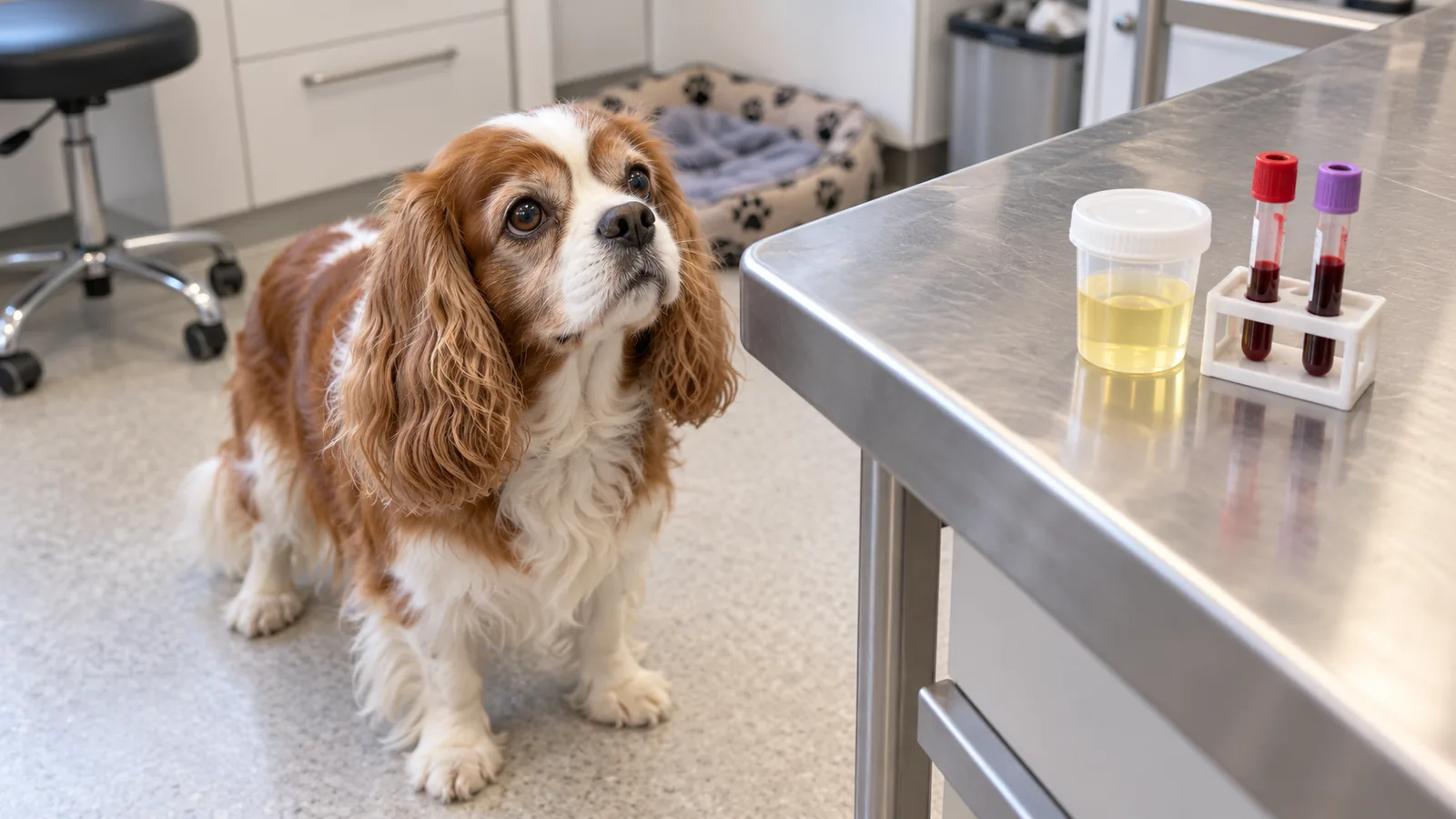
Bloodwork and imaging answer different questions about a senior dog or cat, and neither one replaces the other. Blood and urine testing show how the kidneys, liver, and thyroid are doing and whether the red and white cell counts have shifted, often before your pet looks or acts sick. X-rays show size, shape, and position, which is how we read a heart, a chest, a spine, or a painful hip, and ultrasound adds a look inside the organs when an X-ray cannot settle the question. Blood pressure is its own measurement, because a reading that runs high does not appear on a lab panel or an X-ray, and in cats it can damage the eyes and kidneys before anything looks wrong.
Lewiston Veterinary Clinic knows many of our older patients from their first puppy and kitten visits, and that long record makes a few pounds off the scale or a lab value that has shifted since last year worth a second look. Digital X-ray and ultrasound in our Lewiston clinic mean a dog who has started drinking more or a cat who has quietly gotten thin gets a real answer instead of being chalked up to old age. Our diagnostic testing does its best work alongside regular wellness exams, because a trend catches disease earlier than any single number does. If your dog or cat is in their senior years, set up a senior screening and we will build the plan around what we actually find.
Senior Screening: The Basics
- Some slowing down is normal in an older dog or cat and some of it isn't, and you can't tell which from across the room.
- Blood and urine testing, a blood pressure reading, and imaging each answer a different question, so a clean result on one doesn't settle the others.
- Kidney disease, thyroid disease, high blood pressure, and early heart disease are all quiet at home long before they look like anything.
- Much of what senior screening finds is manageable, and finding it early is what keeps an older pet comfortable.
How Often Should an Older Dog or Cat Be Seen?
Twice-yearly wellness visits give us two chances a year to weigh your dog or cat, put hands on them, and ask what's changed at home. Twelve months is a much bigger slice of life for a 12-year-old cat than for a 3-year-old, and two pounds off a 9-pound cat is more than a fifth of their body weight.
Preventive testing at each of those visits catches kidney, thyroid, and liver changes while the numbers still sit inside the normal range. A senior care plan pairs those exams with bloodwork, urine testing, blood pressure, and imaging when it's warranted, with the combination chosen for the individual pet. A 15-year-old cat who has lost weight and a healthy 8-year-old Labrador don't need the same senior diagnostics, and our doctors build the list around your pet's age, breed, and what's already changed at home.
When Does a Senior Workup Need X-Rays or an Ultrasound?
Imaging gets added when the exam or the lab results raise a question a number can't answer: a murmur, a cough, weight loss, a lump you can feel, straining to urinate, or a dog or cat who has gone stiff in the back end. X-rays are the fastest look at size, shape, and position, and ultrasound takes the next step in, showing the inside of an organ rather than its outline.
| What to compare | Digital X-ray | Ultrasound |
| What it shows best | Outlines: heart, lungs, bones, joints, bladder stones | Interiors: organ texture, bladder wall layers, small masses, free fluid |
| Senior questions it answers | Is the heart enlarged? Is there fluid in the lungs? Which joints are arthritic? | Why is this kidney value climbing? What is this mass attached to? |
| What it's like for your pet | A few seconds of holding still, sometimes with mild sedation for the right position | Lying on one side with a patch of fur clipped, no needles |
What Does a Senior Blood Panel Check?
A senior panel checks two things at once: how the organs are working, and what the blood cells themselves look like. A single value out of place usually points somewhere specific.
| Test | What it measures | What it can catch |
| Complete blood count | Red cells, white cells, and platelets | Anemia, infection, inflammation, some cancers |
| Chemistry panel | Kidney and liver values, blood sugar, protein, electrolytes | Kidney disease, liver disease, diabetes, dehydration |
| Thyroid testing | Thyroid hormone level | An underactive thyroid in dogs, an overactive one in cats |
| Heartworm and tick-borne disease testing | Heartworm or tick-borne infection in the blood | Heartworm, anaplasmosis, ehrlichiosis, Lyme disease exposure |
A kidney value sitting at the top of the normal range means one thing in a cat who has always run high, and something very different in a cat who was mid-range last spring. We start with bloodwork at a senior visit because it covers the most ground with the least fuss for your pet.
What Do Urine Testing and Blood Pressure Add to the Picture?
Urine testing and a blood pressure reading each answer a question a blood panel can't, so both belong with a senior blood draw rather than waiting for a panel to come back odd first.
What Does a Urine Sample Catch First?
Urine is often where kidney trouble appears first, and a urinalysis catches the change while blood values can still look unremarkable: a kidney losing its ability to concentrate puts out something closer to water, and that happens before the kidney values climb on a panel. Glucose points toward diabetes, white cells and bacteria toward an infection, and crystals or blood toward the bladder. Bring a sample from that morning if you can, and if not, we can collect one here.
Why Does Blood Pressure Get Its Own Reading?
High blood pressure, known as hypertension, rarely causes outward signs in dogs and cats, and by the time it causes sudden blindness or a seizure, it has usually been straining the kidneys, heart, and eyes for months. In cats, a high reading often travels with kidney disease or an overactive thyroid. In dogs, kidney disease and Cushing's disease, an excess of the stress hormone cortisol, are the usual causes. The reading doesn't hurt, though a nervous patient needs a few quiet minutes to settle first. When it stays high across readings, a daily medication, often amlodipine in cats, brings it down while we treat whatever is driving it.
How Do You Find Heart Disease Before a Pet Acts Sick?
Heart screening starts with a stethoscope at the exam. Heart disease diagnosis then layers tests that each answer a different question: chest X-rays showing heart size and fluid in the lungs, an echocardiogram watching the valves and chambers move, a blood marker flagging stretched heart muscle, and an ECG recording the rhythm.
The blood marker matters most in cats, because plenty of cats with real heart disease have no murmur at all, so a quiet chest isn't proof of anything. We may recommend a chest X-ray for certain breeds that have a higher risk of heart disease, even if they don’t show symptoms, because catching it early means better treatment options.
Which Changes in an Older Dog or Cat Shouldn't Be Blamed on Age?
A little less interest in the long walk is normal. These aren't, and each one has a treatable cause behind it often enough to be worth a visit:
- Drinking or urinating more: one extra water bowl refill a day passes easily for a hot Lewiston summer.
- Weight loss: pounds coming off without a change in diet.
- A new cough: one that hasn't cleared on its own.
- A lump or a sore that won't heal: anything new since last month deserves a look.
- Bad breath: along with dropping food or chewing on one side.
- Trouble with stairs: or a cat who has stopped jumping onto the counter and picks a lower perch instead.
- Pacing at night, staring at walls, or getting stuck behind the furniture: that points toward cognitive decline rather than simple aging, and that's treatable too.
Many dogs and cats are considered senior around age seven. Giant breeds get there sooner, and plenty of small dogs and cats are still acting middle-aged at nine. A dog who used to meet you at the door and now waits on the rug can pass for a mellow old dog, so all of it is worth mentioning, and you don't need to know what any of it means before you give us a call.
Which Conditions Are Most Common in Older Dogs and Cats?
Senior screening turns up the same short list over and over: thyroid disease, kidney disease, heart disease, cancer, liver disease, arthritis, and gum disease.
An Underactive Thyroid in Dogs
Weight gain on the same amount of food, a coat that thins, skin and ear infections that keep coming back, and a dog who sleeps through what they used to love all pass for normal aging. They're also the classic picture of hypothyroidism, which a thyroid panel confirms and a daily pill treats. Once the dose is right, the energy and the coat usually come back.
An Overactive Thyroid in Cats
In cats the thyroid tends to fail in the opposite direction. Hyperthyroidism speeds up the whole metabolism, stripping weight off a cat with a bottomless appetite while driving up heart rate and blood pressure. A cat yowling at 3 a.m. is a common part of that picture. Treatment can be daily medication, a prescription diet, radioactive iodine, or surgery, and we'll go through which path fits your cat, their kidneys, and your household.
Kidney Disease
By the time a pet is drinking more, urinating more, and losing weight, chronic kidney disease has usually claimed a large share of working kidney tissue, and the earlier stages show up only on blood and urine results. It's one of the most common diagnoses we make in older cats. Our veterinarians manage it with a kidney-friendly diet, fluids under the skin at home for some patients, blood pressure control, and rechecks to watch which direction things are moving. Many cats stay comfortable for years after that diagnosis.
Changes in the Heart
Small-breed dogs most often develop a leaky mitral valve, the valve between the two chambers on the left side of the heart. Large breeds are more prone to dilated cardiomyopathy, where the muscle itself weakens, and cats more often develop a thickening of the heart wall. Coughing, tiring early, fast or labored breathing at rest, and in cats a sudden weakness in the back legs are all worth a call, and starting medication before a pet reaches heart failure can add meaningful time.
Lumps and Cancer
A lump that wasn't there last month, weight loss nobody can explain, a sore that won't heal, or a limp with no injury behind it are what send us looking for cancer, and testing a sample of cells is what names it. Cells read under a microscope here usually separate a harmless fatty lump from something that needs a plan. Golden Retrievers, Boxers, and large-breed dogs generally carry increased risk, which shifts how quickly we want to look.
Liver Changes
Elevated liver enzymes on a routine panel are often the only sign of liver disease months before jaundice, vomiting, or a dropped appetite shows up at home. Mildly high enzymes in an older dog are common and don't always mean trouble, so the next step is usually a recheck, more blood testing, or an ultrasound to see whether the organ's texture has changed.
Arthritis and Joint Pain
Arthritis usually shows up first as a dog who used to finish the whole Lewiston levee walk and now turns for home halfway, takes a few seconds to get up off the floor, and eventually limps. Cats rarely limp at all. What families notice instead is a cat picking a lower perch, missing a jump they used to make, or getting grumpy about being lifted. The exam finds most of it and X-rays confirm which joints are involved. Weight control often does more than any single medication, and from there the options include a daily anti-inflammatory, a monthly injection that blocks the pain signal, joint supplements, and laser therapy. Never give human pain relievers like ibuprofen or acetaminophen; they can damage an older pet's kidneys, stomach, and liver.
Gum and Tooth Disease
Many pets carry some degree of gum disease, known as periodontal disease, by middle age, and the bacteria under the gumline don't stay there, so dental care protects the heart, liver, and kidneys along with the mouth. That smell when an older dog yawns is usually infection, not old breath. Professional dental cleanings happen under anesthesia, because thorough work below the gumline isn't possible on an awake pet, and we recommend bloodwork beforehand to be sure the kidneys and liver can handle the anesthetic. Chewing on one side, dropping food, pawing at the face, and red gums all deserve a look, and brushing at home between cleanings slows the whole process down.
What Families Ask Us Before a Senior Workup
Does my dog or cat need to fast before senior bloodwork?
Holding food overnight gives cleaner results on a few values, especially blood sugar and blood fats, so we'll usually ask you to skip breakfast and bring it along for afterward. Water is fine, and so are daily medications unless we say otherwise. If your pet is diabetic or takes medication with food, call us first and we'll adjust the plan rather than skip a dose.
What if my senior pet's screening comes back normal?
That’s great news! A normal panel is a baseline, and for an older pet that's one of the most useful things on file. Next year's numbers get compared to your pet's own rather than to an average across thousands of animals, and a value drifting inside the normal range still means something. If your dog starts drinking more in February, we won't be guessing about where their kidneys stood in October.
My cat is 15 and slowing down. Is screening still worth it?
Age by itself isn't a reason to skip testing. An overactive thyroid, high blood pressure, and kidney disease are all common at 15 and all treatable, and treating them is often what gets a cat eating, grooming, and moving again. If results point toward something we can't fix, knowing that still changes the plan, because it puts the focus on comfort. Hospice and palliative care is a real option, and we'll talk it through with you.
An Easier Year for Your Senior Dog or Cat
A dog settling in for the evening instead of shifting around on the floor, a cat back up on the windowsill, a weight that holds steady through an Idaho winter: those come from finding a problem while it's still small. If your dog or cat is seven or older, schedule a senior screening at Lewiston Veterinary Clinic and we'll sit down with the results and tell you what they mean for the year ahead.