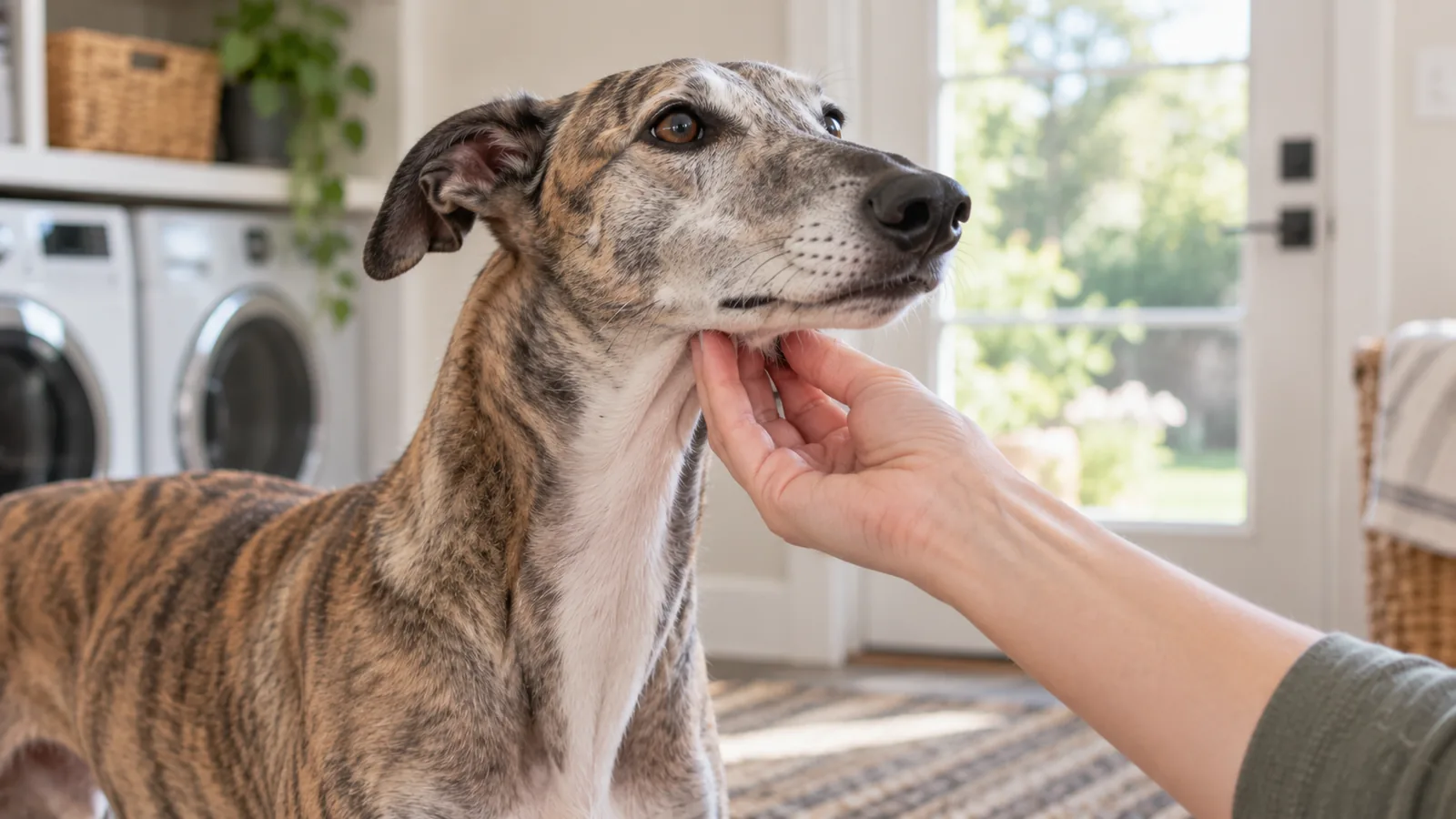
If you have found a swollen lymph node on your dog or cat, the most useful next step is to notice how they are doing otherwise, because the signs that come with the swelling usually narrow down what is causing it. When your pet is also losing weight, running a fever, sleeping most of the day, or turning away from food, the cause is usually body-wide: a spreading infection, an immune disease, or lymphoma, rather than one node reacting to a problem nearby. Coughing, vomiting or diarrhea, flaky or scabbed skin, and drinking far more than normal each point to a different part of the body, and they tell us where to look first. Some pets with dramatically enlarged nodes, though, act completely normal, which is exactly why the swelling still needs to be checked rather than watched.
When you find a lump and your pet also seems off, it is natural to fear the worst, but the only way to tell a reactive node from a serious one is a hands-on exam and a sample of what is inside it. Lewiston Veterinary Clinic in Lewiston can take that closer look, sampling the node and running the infectious disease and cancer screening that tells an infection apart from lymphoma, so treatment is aimed at the real cause. Because so many of the dogs we treat split their time between the couch and the pasture, we look just as hard for ticks, bite wounds, and the infections a working dog picks up in the field as we do for cancer. If you have felt a new lump or swelling on your pet, request an appointment so we can see them in the next day or two, and call us the same day if they have also stopped eating or seem weak.
What a Swollen Node Is Telling You
- Swelling means something has switched the immune system on: infection, inflammation, immune disease, or in some cases cancer.
- The pattern matters as much as the size: one enlarged node near a wound points somewhere local, while several at once suggest something body-wide.
- A fine needle aspirate takes a minute or two, rarely needs sedation, and answers questions that watching and waiting can't.
- Many swollen nodes turn out to be reactive and settle once the underlying problem is treated, and the ones that don't are easier to manage when we find them early.
What Do Lymph Nodes Do, and Where Can I Feel Them?
Lymph nodes are immune checkpoints along the body's drainage routes, filtering fluid, trapping bacteria and viruses, and calling in the cells that clear them. Most stay too small to notice. Five sets of lymph nodes you can actually feel sit near the surface. Work from the back legs forward:
- Behind each knee
- High in the groin
- Deep in the armpit
- In front of each shoulder blade
- Under the jaw
Enlargement is the only signal a node can give you, so a monthly once-over is worth the thirty seconds. Do it when your pet is already settled on the rug or in your lap, and run your fingers over all five spots. You're building a memory of what your own pet feels like, so a change registers. Nodes sit in pairs, so compare left to right, and call if one side feels bigger, firmer, or more anchored than the other, or if something feels larger than it did last month. Not everything you find in those spots is a node, since salivary glands, fatty tumors, abscesses, and insect stings turn up in the same places and need different answers.
Two things to skip at home. Squeezing or massaging a swollen node to drain it only makes it sore. And never start a leftover antibiotic or an old steroid prescription, since steroids can blur the cells in a sample enough to delay a lymphoma diagnosis by weeks. We check all five sites at annual wellness visits, which is how some of these changes get caught before anyone at home has noticed a thing.
Why Would a Healthy-Seeming Pet Have a Swollen Node?
A healthy-seeming pet can have a swollen node because the immune cells inside it are multiplying in response to something, and that starts well before your pet feels sick. Infection, inflammation, immune disease, and cancer all set off the same machinery, and plenty of dogs and cats with dramatically enlarged nodes are behaving perfectly normally at home.
| What your fingers find | The likely explanation |
| Rubbery, firm, painless nodes that came up fast | Lymphoma tops the list, worth a sample this week |
| A node stuck to the tissue beneath it | Fixed nodes can mean invasive disease and need a prompt look |
| Warm, tender, squishy swelling | An abscess or active infection draining into that node |
| Two or more nodes up at once | Something body-wide: tick-borne disease, fungal infection, immune disease, or lymphoma |
| A lone swollen node beside a cut, ear, or bad tooth | A reaction to infection in that node's own neighborhood |
Which Infections Make Nodes Swell?
Infections are the biggest category by far, and they come in two shapes. A cut on a paw, an abscess from a cat fight, or an infected tooth draws the nearest node into the fight, so the swelling stays local and often eases as the original problem heals. When several nodes come up together, the organism is usually traveling through the bloodstream.
Lyme disease arrives by tick bite with fever, shifting lameness, and swollen nodes near where the tick fed, and it rides home with dogs who hunt, camp, or work tall grass. Ehrlichia and Anaplasma are tick diseases that create similar large lymph nodes, but tend to drop platelet counts at the same time. Leptospirosis comes out of standing water fouled by wildlife and livestock urine, a real consideration for dogs working around cattle or swimming our rivers. Mycobacteriosis is rarer and mostly feline, producing slow, stubborn skin and node changes in cats who hunt. Fungal causes follow geography: Valley fever rides home from the desert Southwest months later, blastomycosis and histoplasmosis run through the Midwest and South, and aspergillosis turns up almost anywhere. In cats, both feline leukemia virus and feline immunodeficiency virus swell nodes while hollowing out the defenses behind them, and one small blood sample settles both. Parasites finish the list: toxoplasmosis, a heavy intestinal worm burden, and skin carrying more fleas or mites than it can handle.
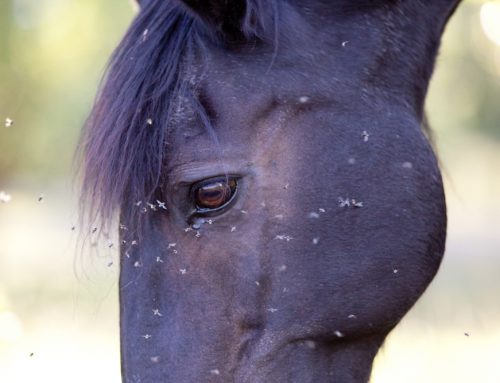
Livestock and horses have their own versions, and several of them spread. Strangles, caused by Streptococcus equi, swells and abscesses the nodes under a horse's jaw and moves fast through a barn, so isolate that horse and call before hauling him anywhere. Caseous lymphadenitis puts firm, abscessed nodes on sheep and goats and passes to herdmates through the drainage, so don't lance one yourself; our small ruminant care includes sorting that out on the farm. In cattle, nodes that stay enlarged raise the question of bovine leukosis.
Could This Be Lymphoma?
Canine lymphoma causes many of the dramatic, seemingly overnight node enlargements we see, and most of those dogs are still eating, playing, and acting normal on the exam table. Roughly one in fifteen dogs will develop lymphoma, and lymphoma risk in Golden Retrievers is closer to one in eight. We sample early for that reason: a dog diagnosed while they still feel good has the most doors open.
Cats play by other rules. Feline lymphoma usually sets up in the intestinal wall, where weight loss, vomiting, and appetite changes appear long before anything feels enlarged under the skin. Other tumors reach the nodes too. Mast cell tumors, melanoma, and various carcinomas spread first into whichever node drains the area they started in, which is why we often sample the node nearest a suspicious lump even when that node feels ordinary.
What If It Isn't an Infection or a Tumor?
Sometimes the body's own defenses are the trouble. In immune-mediated hemolytic anemia, the immune system destroys the pet's own red blood cells, and pale gums, weakness, and reactive nodes show up together. Lupus and immune-mediated polyarthritis, a painful inflammation of several joints at once, create a similar picture with fever and dogs who won't get up off the floor.
Vaccines belong in this group as well. A slightly swollen node nearest an injection site falls within normal vaccination reactions in the day or two afterward, while facial swelling, hives, or vomiting needs a call right away. From the outside none of these look different from a common infection, and the workup stays the same.
How Do We Find Out What's Causing It?
Sorting out the cause moves in order: a hands-on exam, then a sample of the node itself, then blood work and imaging to answer what the sample can't, and most cases are solved in the first two steps. The exam weighs size against what is normal for that spot, along with texture, left-to-right symmetry, tenderness, and whether the node glides or feels anchored.
What Is a Fine Needle Aspirate Like?
Fine needle aspiration uses a needle no bigger than the one we draw blood with, takes a minute or two, and most pets never need sedation. The cells land on a slide, get stained, and go under the microscope, where we look at what's multiplying inside: inflammatory cells that fit an infection, a mixed reactive population, or a uniform sheet of lymphocytes that points toward lymphoma.
Our team collects these samples routinely, and most pets are back in the lobby before they've decided anything interesting happened. Subtle slides go to a clinical pathologist at a reference laboratory for a second read, and a biopsy is the step up when cytology can't settle the question or a subtype needs confirming.
Where Blood Work and Imaging Come In
A chemistry panel and complete blood count show whether the rest of the body is involved: white cell patterns that fit infection, anemia, low platelets, organ values drifting out of range. In-house laboratory testing means those numbers don't wait on a courier run to another city. The same sample screens for tick-borne organisms that push nodes up while dropping platelet counts and leaving dogs feverish and reluctant to move.
Imaging reaches the nodes your hands never will. Chest radiographs show the ones deep in the chest along with the lungs, and abdominal ultrasound covers the nodes around the intestines plus the spleen and liver. When lymphoma is the likely answer, that imaging doubles as staging, which shapes the treatment conversation and what we can tell you about what comes next.
How Is a Swollen Lymph Node Treated?
A swollen lymph node is treated for whatever the sample turned up, not for the swelling itself. Guess at it and the swelling half improves while the real cause keeps working, and weeks vanish.
| What cytology shows | Where treatment goes |
| Lymphoma | Chemotherapy with remission as the goal, or comfort-first care when that suits your pet and family better |
| Immune-mediated disease | Drugs that quiet an overactive immune system, tapered off slowly with monitoring |
| Fungal infection | Antifungal medication, usually for months, with rechecks and repeat testing throughout |
| Tick-borne disease | A course of doxycycline, and many dogs perk up within the first few days |
| A reactive node beside a local infection | Fixing the source: the abscess, the bad tooth, the skin infection, with antibiotics when warranted |
Chemotherapy protocols are built around B-cell and T-cell subtypes, which respond at different rates and hold remission for different lengths of time. For most dogs the honest target is a lasting remission, not a cure, and dogs in remission generally eat well and feel like themselves for a good stretch. Families who pursue chemotherapy usually do it with a veterinary oncologist, and we coordinate that referral and handle the blood work and rechecks in between.
Not every family chooses treatment, and that decision deserves the same respect as any other. Hospice and palliative care keeps a pet comfortable when chemotherapy isn't the right fit or when a remission has run its course.
Which Causes Can You Head Off in Advance?
You can head off a good share of the infectious causes, though not the cancers.
Parasite prevention: year-round flea, tick, and intestinal parasite control heads off most tick-borne disease and spares the immune system a constant flea burden.
Dental care: the nodes under the jaw sit downstream of the mouth, and periodontal disease keeps a low-grade bacterial load pushing on them for years. Professional dental cleanings under anesthesia clear that out and find what a quick peek never will.
Vaccines: core vaccines cover several infections on the list above, including leptospirosis for dogs around water and livestock and feline leukemia for cats who spend time outdoors.
Blood-based screening tests can pick up lymphoma months ahead of a node you can feel. They don't replace an exam, but for senior dogs and higher-risk breeds like Golden Retrievers, Boxers, and Bernese Mountain Dogs, they're worth asking about at the next visit.
How Fast Should a Swollen Node Be Checked?
A swollen node you just found should be examined within about 48 hours, and sooner if your pet is also refusing food, weak, or breathing strangely. When the picture blurs, call us and we will sort it out.
Come in the same day for labored breathing, pale gums, throat swelling that makes swallowing look hard, collapse or marked weakness, or a fever in a pet who will not stand up. Aim for the next 48 hours with a new node you can feel, several at once, a firm lump that will not slide under your fingers, or swelling alongside weight loss, fever, or a fading appetite. Later in the week works for slight enlargement in a bright, happy pet, or leftover fullness after a vaccine or a healing wound.
Urgent and after-hours care is available for pets in Lewiston. While we’re open, we accept same-day visits for pets in need. After we close, a rotating on-call schedule covers small animal emergencies from 5 to 10 p.m. Monday through Friday and noon to 10 p.m. on Saturday, and calling us routes you to whichever clinic is on call that night. Outside those windows the nearest veterinary emergency hospital is the right destination.
Not sure which of those fits your pet? Give us a call and describe what you're feeling under your fingers, because sorting that out over the phone is part of the job.
Lymph Node Questions Pet Families Ask Us Most
Will a swollen node ever settle down without treatment?
A swollen node can settle on its own once the trigger behind it clears, and one that came up with a scratch or a sore tooth often shrinks within a couple of weeks of treating the source. The catch is that a shrinking reactive node and an early lymphoma feel identical from the outside, and a quick sample beats a two-week guessing game.
Does a swollen lymph node hurt my pet?
Whether a swollen lymph node hurts depends on what is driving it. Nodes enlarged by an active infection are often tender, warm, and sore enough that your dog or cat pulls away from your hand. Lymphoma nodes are usually painless, which is why they grow so large before anyone notices, and why "she doesn't seem bothered" isn't reassurance by itself.
My cat's nodes feel normal but she's losing weight. Should I still worry about lymphoma?
Weight loss in a cat deserves investigation no matter what the nodes feel like. The most common form of feline lymphoma sits in the intestinal wall and in nodes deep in the abdomen, where no one can feel it from the outside. Blood work and an abdominal ultrasound are the right first moves, and they screen at the same time for the other frequent causes of feline weight loss: kidney disease, hyperthyroidism, and diabetes.
Getting an Answer About Your Pet's Swollen Node
The hardest part of finding a swollen node is the stretch between noticing it and knowing what it means, and that stretch is usually much shorter than families expect, because an exam and a small sample answer most of these questions.
If you've felt something under your pet's jaw or behind a knee that wasn't there last month, schedule a visit at Lewiston Veterinary Clinic and let's take a look together.